


Spiritual Practice — The Harmony of Knowledge and Devotion
Understanding spiritual life through thoughtful learning, sincere practice and loving service.
The Mahā-mantra
Hare Kṛṣṇa Hare Kṛṣṇa Kṛṣṇa Kṛṣṇa Hare Hare Hare Rāma Hare Rāma Rāma Rāma Hare Hare
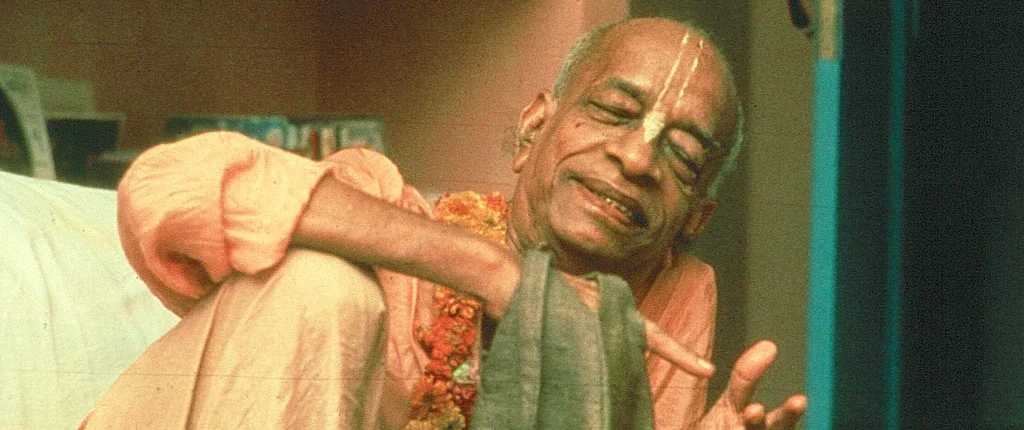
The chanting of the Hare Kṛṣṇa mahā-mantra is central to the devotional practices taught by His Divine Grace A.C. Bhaktivedanta Swami Prabhupāda. Chanting may be undertaken individually or together in kīrtana, offering an opportunity to remember Krsna and cultivate devotion.
Knowledge and Practice Together
In the Vaiṣṇava tradition, genuine spiritual understanding is supported by both philosophy and devotional practice. Sacred texts help explain the nature of the self and our relationship with the Supreme Lord, while regular practices such as hearing, chanting, prayer and service provide opportunities to apply that understanding.
Śrīla Prabhupāda explains in his purport to Bhagavad-gītā As It Is 3.3 that religious practice without philosophical understanding may become sentimental, while philosophy separated from spiritual practice may remain speculative. The two are intended to work together.
Humility and Thoughtful Enquiry
The beginning of spiritual learning is a willingness to recognise that our understanding may be incomplete. Humility does not require setting aside intelligence or accepting every claim without consideration. Rather, it encourages sincere questions, careful study and respectful guidance from qualified spiritual teachers.
The Bhagavad-gītā (4.34) describes learning through sincere enquiry, service and approaching a realised teacher. Spiritual growth is therefore neither blind imitation nor an exercise in intellectual display; it is a continuing process of learning and applying knowledge with sincerity.
A Steady and Meaningful Practice
A devotional routine can begin simply: setting aside time for chanting, listening to a class, reading a short passage of scripture or offering practical service. A regular practice is more meaningful when approached attentively than when treated as a performance or competition.
People differ in experience, capacity, responsibilities and circumstances. Participation may take different forms, and learning can proceed at a thoughtful pace. The aim is to develop steady understanding, not to measure ourselves against others.
Spiritual Understanding in Daily Life
As spiritual awareness develops, its expression may become visible in everyday relationships: greater patience, honesty, gratitude, compassion and a sincere desire to serve. Vaiṣṇava teachings invite us to understand ourselves not as independent competitors of the Supreme Lord, but as persons whose natural spiritual fulfilment lies in loving service to Krsna.
This does not mean difficulties disappear. Rather, spiritual understanding and regular practice may help a person meet changing circumstances with a deeper sense of purpose. Such experiences should not be regarded as guaranteed health outcomes or a measure of another person’s spiritual advancement.
Ultimately, devotional practice is a lifelong opportunity to bring knowledge, reflection and loving action into harmony, deepening our relationship with Krsna and encouraging greater care for all living beings.
References — Original Lifetime Publications
A. C. Bhaktivedanta Swami Prabhupāda, Bhagavad-gītā As It Is (original complete Macmillan edition, 1972), 3.3 (purport), 4.34 and 9.14.
A. C. Bhaktivedanta Swami Prabhupāda, Back to Godhead, Vol. 1, Parts 1–4 (1944), “The Science of Congregational Chanting of the Name of the Lord (Saṅkīrtana).”
All scriptural teachings above are paraphrased unless indicated as the mahā-mantra; no prose quotation is represented as a verbatim passage.