 Devotee Health

Devotee Health
Philosophy
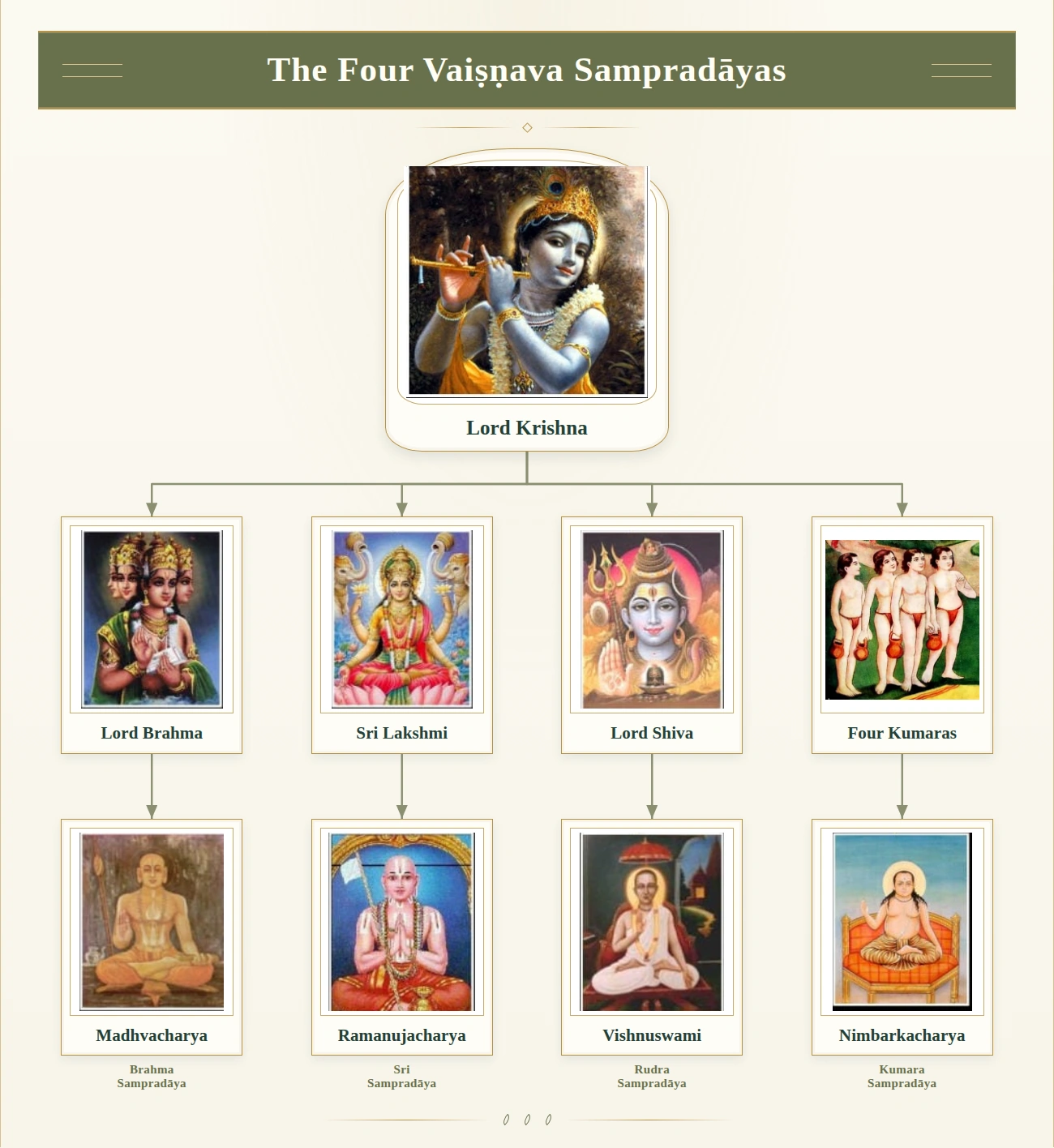
The following discussion retains the website’s supplied writing on spiritual identity, scripture, understanding and practice.
Spiritual life begins with the understanding of oneself and others as eternal spiritual beings. As one advances in spiritual life, one can also experience the role the Supreme Person has in one's life. The more one realises one's relationship with the Supreme Person, the more one experiences something beyond what is expected in ordinary material life: true spiritual love, knowledge and bliss. Because of its repetition of birth, death, old age and disease, material life is problematic for the eternal spiritual soul. There is no complete happiness that the soul can experience simply by satisfying the demands of the body in the form of eating, sleeping, mating and defending. The soul has spiritual senses, and only when these spiritual senses are satisfied can the soul find actual happiness. The spiritual exchange between the soul and the Supreme Person is called devotional service and can be performed even by using the present senses of the body in which the soul is embodied.
Spiritual life also requires not only spiritual activities but spiritual understanding. Without genuine spiritual philosophy, knowledge is incomplete and subject to mental speculation. The Supreme Person has given us spiritual knowledge in the form of different scriptures given to different people under different circumstances. These scriptures contain different degrees of knowledge and understanding of the Supreme and His energies. However, in a book called the Bhagavad-gita, spoken by the Supreme Person Himself, there is complete knowledge of the nature of the world we live in, our eternal identities as spiritual souls, and the identity and nature of the Supreme Person. Those who have studied such a scripture, tried to understand its meaning and put it into practice in their own lives are devotees of the Supreme Person and bona fide guides who can help us advance in our own spiritual lives.
It is said that religious practice without a basis of eternal knowledge and philosophy can remain on the fanatical or sentimental platform. Similarly, philosophy without a regulated spiritual practice of service to the Supreme Person can keep one on a platform of mental speculation.
A sincere seeker must have certain qualities to actually realise the truth. The first qualification is the humility to accept that there is something to learn beyond the materialistic technology taught in present-day materialistic society. That humility, and a willingness to follow the methods given for the spiritual process, can lead one along a progressive path of self-realisation.
Humility does not mean the abnegation of intelligence, but the proper use of it to experience something beyond one's roles in materialistic culture, seeing oneself as an assistant to the Supreme in all one's activities and relationships rather than His competitor.